
Ted Koppel interviewed Morrie Schwartz in March of 1995 and began the televised segment asking the question above.

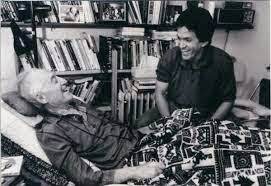
I have just finished rereading Tuesdays With Morrie by Mitch Albom for…well, I don’t even know how many times I’ve read it over the years since I read it to classes. It is one of the books that has influenced me and made more of an impact on my life than maybe any other. (This is not to diminish the impact of the Bible – but I keep that for a category unto itself.) Each time I read it, I learn. Sometimes the learning is in the form of review of ideas I’ve let slip away. But even after reading it so many times, I still learned new things or focused on things differently than I did all those years ago when it was first published.
Back when I first read the book, I had a student who was also reading it. When he had finished it, he came into my room waving the book and declaring, “EVERYONE has to read this book! You have to make everyone read it!” Being a bit cynical on my ability to influence people with my grade book sitting in front of me, I asked how he proposed I do that since my assigning reading was no guarantee of it actually happening. I asked, “What am I supposed to do? Read it to them?” And he said, “YES!” The idea took root and happened.
Upon reading it again today I am struck again by Morrie’s wisdom and the lessons I and probably we all need to learn. Recently I had the privilege of being with a strong woman of faith who was able to approach her death the way that Morrie had. She was at peace, able to talk about planning final arrangements with her daughter, took on conversations with her grandchildren about what was happening, and made changes around the house that would make living alone physically easier on her husband. After watch Donna and reading Morrie’s words, I am once again struck wondering if I am that strong or will I go screaming into that good night.
I wonder as I face aging if I will accept Morrie’s challenge to not “wither up and disappear.” Each month I notice things that used to be easier or that I just don’t have the energy for any more. Can I “Accept what you are able to do and what you are not able to do”; “Accept the past as past, without denying it or discarding it”; “Learn to forgive yourself and to forgive others”; “Don’t assume that it’s too late to get involved.” Morrie asked and made the decision, “‘Am I going to withdraw from the world, like most people do, or am I going to live?’ I decided I’m going to live—or at least try to live—the way I want, with dignity, with courage, with humor, with composure.” And I wonder have I ever done that fully.
I was called to account as I read. He talked of family being there for each other and what it takes for a strong marriage. As I read, I thought that his words were important in all relationships that are important in our lives. Having respect for the other person, compromising, talking openly, sharing values, being heard, knowing there is someone who will listen. All of this has to be a two-way street or the relationships are not nourishing both parties. If one is always giving and the other taking, if one isn’t there when the going gets tough (especially after someone was there for them), or if only one can speak openly and be heard even when the topic is tough…well, as he said, “there will be trouble.” When I’m unwilling, afraid, or distrustful to make an attempt or when I’m hanging on to anger from long ago, I am destroying a relationship. Some are meant to be let go, but I need to examine what part I had in making them what they are and what I should be trying to do.
I needed to read the parts about forgiveness. Letting go. The tension of opposites. Making my own path based on my values instead of what the culture values. Self-pity.
I loved his conversations about giving and loving. He talked of how you could have purpose even in his situation where he couldn’t leave the house or walk. He invited people in. He listened to their problems and concerns. He devoted himself to others around him.
I was reminded of a piece I read recently by Nadia Bolz Weber where she talked about how easy it was to get bogged down in compassion because we watch all of the suffering around the world online and on tv only to feel overwhelmed and incapable of doing anything. But that isn’t where we are able to make a difference. Our impact has to be local and personal. Call someone. Send a card, write a letter, write an email. Invite someone out to lunch or a movie, or invite them into your home for a night of games or card. Listen to them. Don’t always accept “I’m fine” when you don’t think they are. After hearing of the impact this man had from a recliner in his office, no one can say there is nothing they can do.
If you have never read this book, if it has been twenty-five years since you met Morrie and Mitch, if you haven’t read it for a few years – well, no matter which case is true for you, read it now. You will be the better for it. Those around you will be too.
I find new wisdom and compassion and guidance through Morrie Schwartz each time I sit and “listen” to him. Even though I had my old, first-edition hardback, I chose to purchase a new copy on Kindle. I was glad I did because it came with a new section following the book. Mitch Albom reflected on the 25th anniversary of the publication, on his old professor, how the book came to be written, and the impact the book still has. As the last line of both the book and the new afterword says, “The teaching goes on.”

 A Word Aptly Spoken
Leave a Reply