
Most people know this truth, and certainly any student of history can verify for you that there are evil people in the world. There are those who care nothing about their fellow man. They have been a part of the history of the world since the beginning of time. They hated, conquered, raped, pillaged, tortured, slaughtered, and basked in their power and wealth without a concern for anyone but self. Adolph Hitler. Mao Zedong. Idi Amin. Caligula. Kim Jong Il. Nero. Joseph Stalin. Pol Pot. Josef Mengele. Genghis Kahn. Saddam Hussein. Vladimir Putin. Attila the Hun. Ayatollah Khomeini. Maximilien Robespierre. And the list could go on.
We could add would-be dictators who would aspire to these ranks. Yep, imagine that there are actually people who look up in admiration to those named above! Not just people from “there” but those from here as well —people within America’s own history and present. The Times Leader Media Group in Pennsylvania surveyed academics, historians, law professors, and political scientists to come up with a list of the worst Americans. The compiler of the list describes the directions given saying, “I purposefully sketched only loose criteria for being the “worst.” I asked that nominations include only people who held positions of public responsibility or power — elected officials, business magnates, judges, polemicists, generals and so forth. I was not looking for the most evil people such as serial killers and sex criminals.” The list they offered started with the top five: Richard M. Nixon, Nathan Bedford Forest, Joseph McCarthy, Donald J. Trump, and J. Edgar Hoover. But it also gave mention to Benedict Arnold, Father Charles Coughlin (who had a popular radio show that promoted fascism and anti-Semitism), Jimmy Swaggart, Rush Limbaugh, Sean Hannity, Andrew Johnson, Henry Billings Brown (Supreme Court judge in the Plessy v Ferguson case), Eugene “Bull” Connor, Andrew Jackson, Bernie Madoff, and others.
And the fact that the media group says that these lists don’t include serial killers and sex criminals is not at all comforting, but does contribute to the overall thesis that there are evil people in all generations, in all countries. We have to face the truth that these evil people are among us. We hear about them on our nightly news.
Okay, but these people are known in history because they are NOT like other people. Certainly all of humanity cannot be judged based on them. Their notariety comes from being power hungry, brutal, immoral, greedy brutes. Maybe even knowing all of these names and more, we can still hold on to the idea that humanity is basically good. We can look to examples on the other side of the spectrum. Saint Francis of Assisi, Mother Teresa, Danny Thomas (founder of Saint Jude), Millard and Linda Fuller (founders of Habitat for Humanity), Nelson Mandela, Bono, Chef José Andres (founder of World Central Kitchen) along with many celebrities and athletes who have foundations and who use their fame and wealth doing work to help others.
Looking around at the people in our communities can sometimes give evidence of the goodness in people. There are those giving of their time at food pantries, libraries, hospitals, events celebrating equality and supporting our LGBTQ+ neighbors. Every time there is a mass shooting or a disaster, people take to social media quoting Mr. Rogers’ advice to “look for the helpers” so that we can still see the good in the world and not let despair cover us.
For all of my life I basically looked at humanity as decent at its core. I have always wanted to believe that people are good, that they will rise to an occasion in the lives of their friends and family just as we watched for the helpers in television coverage of major tragedies. Some do. But lately I have been reminded over and over again of Dr. Maya Angelou’s words. “When someone shows you who they are, believe them the first time.”
I have written extensively of the need to set boundaries as well as my willingness to forgive but inability to forget. I’m sure I am not alone there. I’m also sure that there are lots of people unwilling to do either. The second part has been problematic for me quite often, but I never thought of my willingness to forgive as something negative. I have been able to forgive my ex and his wife (the woman he had an affair with while we were married) and feel no ill will toward them. We have been able to sit down to dinner together, attend athletic events, graduations, weddings, and funerals together for the sake of our son. I have put what happened in the past; however, I don’t forget what they did. I forgave so that I don’t carry an anger that will eat me. Every now and then there is still a tinge of hurt or resentment, but I certainly never dwell on it and can have exchanges with them without the past ever coming to mind. But I will never forget nor fully trust them. That seems reasonable to me. A paragon of forgiveness, right? It is seemingly impossible to believe that I could forgive something that big but not the hundred little things, things that don’t seem to matter.
What can become more insidious are the seemingly minor actions and careless words of people we trust and care for. We have “good” friends and family members who have done small (and sometimes large) things that hurt us, hurled words that stung, and did other things that they have probably forgotten over the years. Perhaps like me you have believed that you have forgiven. It turns out I haven’t. Could this be true for you too? Since these things were never discussed, never dealt with, never acknowledged in many cases, they often come up as the long litany of offenses when a new one occurs. And the hurt or anger arise letting us know that forgiveness hasn’t really happened. The pain and hurt have been swept under the carpet. And if we haven’t forgiven, Lord knows, we have not forgotten. The mere fact that there is a long list could be the answer to why.
In all of my writing and thinking and searching for answers about setting boundaries to protect a person’s health and well-being, I have never considered when it is okay to do what Dr. Angelou says. I am guilty of not following her advice to believe that those actions are showing who the person really is. I mean, we want to show a little grace, don’t we? We don’t want to demand perfection of our loved ones. We don’t want them to expect perfection from us. So we aren’t looking at someone who screwed up and was truly sorry. We aren’t looking at someone who apologized and didn’t do it again. After all, the real measure of an apology is changed behavior. If the behavior continues, it is a choice. So as we determine where the boundaries need to be, we also need to consider what to do when those boundaries are constantly violated.
When do you say “enough” and not give it a chance to happen again? Is it when a friend repeatedly lies to you – sometimes to gain your sympathy or assistance, sometimes to manipulate a situation, sometimes to hide things? Is it when they openly say things they know will hurt you and try to make you the villain in the aftermath? Is it when a person shows that the friendship you thought you shared is a facade by cancelling plans many times at the last minute to do something else or when they believe a lie that someone else said about you? Certainly, everyone wants to give their friends some slack and not judge them for one action or one careless, hateful word. Right? So how many times can you or should you allow such things to happen before walking away? Even when you know that some actions and words are the result of their hurts and trauma, how much can you allow them to throw on your shoulders to carry?
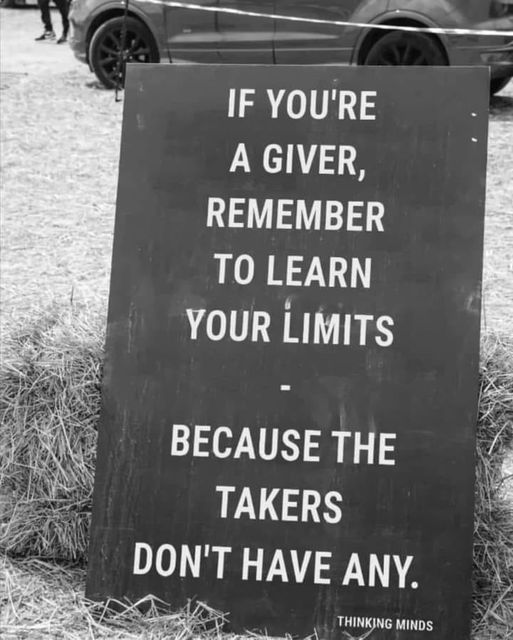
I was led to a startling discovery today. I’m wondering if this will ring true to you as well. When these people take advantage, do things that are hurtful — when they keep showing you who they are and you get angry over the hurt you feel… Who caused the hurt? Who are you angry with? Are you really angry with them or is it with yourself? Today I came to realize that while I may complain about and feel that I was hurt by someone else, quite often my anger is really with me. It has to do with the shame that comes from realizing that you allowed it to happen. Again. You’ve set yourself as a doormat. It is the realization that you have not drawn the boundaries to keep your sense of self and worth protected. Heeding the advice Dr. Angelou gave, could have saved a great deal of hurt. Who are you angry with?

 A Word Aptly Spoken
Leave a Reply